Negamon Lite: Monster Battle
- 4.7
- Rating
- 1.00M
- Installs
- Free
- Price

 Analysis by App-foxy
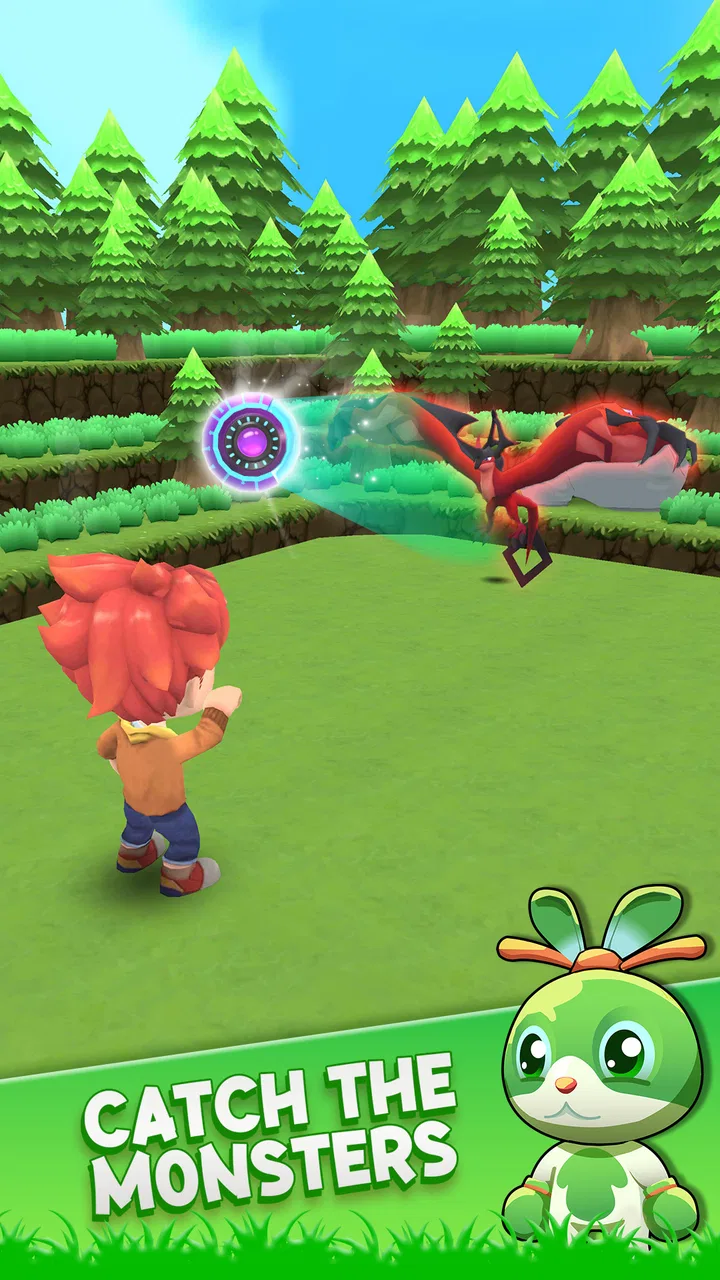
I went into Negamon Lite: Monster Battle expecting a quick monster-catching action game, and that is exactly where it makes the strongest impression. The first thing I wanted to understand was simple: what do I actually do from one moment to the next, and does the game give me a good reason to keep playing? In my experience, its appeal comes from the compact cycle of taking action, seeing an immediate response, earning progress, and starting another attempt before the previous one has completely faded.
This is a free action game from Teraxel Limited, built around the idea of training monsters and taking them into battles. It is aimed at Everyone, so the presentation is approachable rather than harsh or intimidating. The game has already attracted over a million installs and holds a 4.7 average from around 49 thousand ratings, which suggests that its straightforward format has found a sizeable audience. Those figures do not automatically make it a good fit for every player, but they do match my impression that this is designed to be picked up quickly.
The word “Lite” matters to me here. I would not approach this as a giant, slow-burn role-playing game with a huge world to study. I see it more as a lighter adventure for players who want monster battles without committing to a complicated routine every time they open their phone. That makes it easy to recommend in some situations, although players looking for deep strategy, long-form storytelling, or highly detailed competitive systems may eventually want something more demanding.
You May Also Like

 Blood Strike: 2.5 Anniversary
Blood Strike’s Loadouts Turn Every Drop Into a Tactical Gamble
A close look at Blood Strike’s custom loadouts: how fast access to signature weapons reshapes its battle royale rhythm, rewards preparation, and narrows the gap between fights.

 Pandora - Music & Podcasts
Pandora’s Music Is Easy to Start, but Harder to Recover
Pandora’s strength is its low-effort path from a seed to a station. Its weak spot is how much confidence it asks you to place in connection, setup, and quiet recovery.

 8 Ball Pool
 Is Built on Rivalries, Rematches, and Routine
A close look at the rivalries, rematches, shared routines, and unanswered safety questions that turn a quick pool match into a persistent mobile community.

 Samsung Music
’s Quiet Strength Is Playing What You Already Own
Its reach comes less from spectacle than from dependable access to a personal library. That simplicity is both the app’s strongest retention engine and its ceiling.

 AccuWeather: Weather Radar
AccuWeather Review: A Quick, Clear Forecast for Everyday Decisions
For everyday plans, the best forecast is the one you can understand quickly. AccuWeather makes rain timing, radar, and local conditions easy to act on, with a few trade-offs.

 Hill Climb Racing
Why Hill Climb Racing Still Turns Crashes Into One More Run
A tiny car, a bumpy hill and one more upgrade: Hill Climb Racing keeps resurfacing because its simple chaos makes every near-miss feel personal.
More From Our News Desk



How the battle loop feels from the first action
I judge a battle loop by whether its first action tells me what kind of attention the game expects. Here, the useful question is not just whether a monster wins, but whether I can read the result well enough to make a better next choice. That distinction leads naturally to how the game’s feedback shapes the urge to keep playing.
The opening decision is easy to understand
What works well at the start is that the game gives me a clear reason to act. I am not wandering through a menu-heavy experience trying to decode a dozen systems before anything happens. The monster-training premise creates an immediate goal: prepare a creature, enter the next confrontation, and see whether the choices made before battle were useful.
That clarity is important on a phone. When I have only a few minutes, I do not want to spend the entire session remembering where a feature is or rebuilding a plan from scratch. The action is easier to appreciate because the game keeps the central question visible: can my current monster handle what comes next? Even when the answer is no, the failure points toward another attempt rather than ending the experience completely.
The first action is also where the game’s accessibility shows. A younger player or someone unfamiliar with monster battlers can understand the basic fantasy without needing to read a manual. The Everyone age rating fits that welcoming approach. At the same time, a simple opening does not mean the game has no room for judgement; deciding when to push forward and when to improve the team is still part of the satisfaction.
Action has to produce a visible response
For this type of game, controls and presentation matter less because they are flashy and more because they need to make cause and effect obvious. I want to know when my input has changed the situation, whether an attack was useful, and whether the opponent is close to being beaten. Negamon Lite: Monster Battle is most enjoyable when that relationship feels immediate: I do something, the battle reacts, and I can make the next decision with better information.
That feedback keeps the opening minutes from feeling like passive waiting. The game’s premise would lose much of its charm if battles were only a sequence of taps with no sense of consequence. Instead, the fun comes from watching a small decision turn into a result, then using that result to decide whether to continue the same plan or adjust it.
I especially like this structure for players who do not want a long tutorial before reaching the main activity. The game is easier to test for yourself because the central loop becomes apparent quickly. If you enjoy watching a monster improve and then putting that improvement under pressure, the opening is likely to make sense. If you prefer action games built around constant movement, precise timing, or highly physical controls, this may feel more like a strategic battle routine than a traditional reflex game.
Monster training gives the action a purpose
A battle is more satisfying when it changes what I can do afterward. The training angle gives each confrontation a purpose beyond simply clearing another opponent. I am not only asking whether I won; I am also thinking about whether the monster is becoming more useful, whether my choices are moving me toward a stronger lineup, and whether the next challenge is worth attempting immediately.
That is the first non-obvious strength I noticed: the game’s action is easier to return to because it is connected to preparation. A single encounter may be short, but it sits inside a larger rhythm. The best moment is not necessarily the victory itself. Often it is the point just after victory, when I can see that the result has opened the door to another decision.
Why the feedback rhythm keeps another session tempting
I find the most tempting rhythm is one where a result gives me a reason to return, rather than simply asking for another tap. A short session can feel complete when I leave with a clear idea to test next time; without that pause, repetition is easier to mistake for progress. The next section looks at why that small feedback cycle can keep a return session appealing.
Fast results make short sessions practical
The most useful quality for everyday play is the feedback rhythm. I can open the game during a break, play through a small piece of progress, and stop without feeling that I have abandoned a complicated campaign. That makes it a natural fit for waiting rooms, short commutes, or the few minutes before bed, provided I am comfortable with the game’s action-focused format.
A realistic use case would be a player who has ten minutes between tasks. Instead of starting a large role-playing game that demands attention for an extended stretch, they can check the current monster, enter a battle, assess the result, and decide whether one more attempt makes sense. The important part is the decision at the end of that first round. The game encourages another session because there is usually an unfinished question: can a small change in training or approach produce a better outcome?
This is where I think the game competes well with more elaborate monster-collection alternatives. Bigger games may offer broader worlds and more systems, but they can also create more friction before the next meaningful battle. Negamon Lite feels more direct. It does not ask me to treat every visit as a major expedition. I can use it as a compact activity and still get the basic satisfaction of preparing, fighting, and improving.
The rhythm is helpful, but repetition can become noticeable
The same compact loop that makes the game convenient can also become its main limitation. If I play for a long stretch, the pattern may start to feel familiar: choose an action, observe the result, collect the outcome, and prepare for the next confrontation. Players who enjoy repetition as a form of gradual progress will probably find that relaxing. Players who need constant mechanical surprises may feel that the game is asking them to repeat a proven routine.
My advice is to treat it as a game for focused bursts rather than automatically assuming it will replace a deeper action role-playing title. The experience works best when I let each session have a small purpose. I might try to get past a difficult fight, improve a monster, or test whether a different approach changes the result. Without that personal target, the loop can feel less meaningful.
That is a useful trade-off rather than a flaw that affects everyone. A lighter design makes the game more approachable, but it also means the long-term appeal depends heavily on how much I enjoy incremental monster training. Someone who wants a highly varied campaign should compare it with a fuller adventure game. Someone who wants a repeatable battle routine may appreciate the restraint.
Small decisions matter more when I avoid rushing
One practical tip is not to treat every defeat as a signal to immediately repeat the same action. The feedback is more valuable when I pause long enough to identify what changed between attempts. Did I enter too early? Did the current monster need more preparation? Was I relying on a familiar approach simply because it was convenient?
This creates a better rhythm than mindless retries. I get more from the game when each attempt answers a question. That approach also reduces one of the common frustrations in repeatable battle games: spending time on a sequence without learning anything from it. Even if the game remains accessible, my own method can add depth by turning each encounter into a small experiment.
The reward is more than winning one battle
I do not treat a win as the only meaningful outcome: a battle can also show me whether my preparation was useful and what I should reconsider. Thinking that way makes the training premise feel more purposeful, especially for players who enjoy gradual improvement over constant novelty. It also sets up a practical question: how can I stop after one attempt and still know where to pick up later?
Progress gives the next attempt a reason
The reward structure is most effective when it makes improvement feel connected to the action that earned it. Winning is satisfying, but the stronger motivation is knowing that the result helps prepare the next challenge. Monster training gives the game a clear bridge between present effort and future capability, which is why I rarely see a battle as completely isolated.
I also like that this kind of reward supports different play styles. A goal-oriented player can focus on clearing the next obstacle. A collector-minded player can care more about building a capable group of monsters. A casual player can simply enjoy the feeling that a short session left the game in a slightly better state than before. Those motivations can coexist without requiring every player to approach the game in exactly the same way.
The store summary calls it an adventure of a monster trainer, but I think the practical appeal is narrower and clearer: it turns training into a reason to keep testing the team. That distinction matters. If you are expecting a story-heavy adventure with extensive exploration, the premise may raise expectations the game is not trying to meet. If you want a battle-centered monster journey, the focus is easier to appreciate.
Free access lowers the barrier, while purchases deserve attention
The game is free to download, which makes trying it straightforward. I can find out whether the battle rhythm suits me before deciding whether it deserves a regular place on my phone. There are in-app purchases ranging from under a dollar to nearly fifty dollars per item, so I would recommend approaching the optional spending carefully, especially if a child will be playing.
My practical rule would be to enjoy the early loop first and avoid treating purchases as the answer to every difficult encounter. If progress feels satisfying without spending, the game has already done its most important job. If I start feeling that I need to buy something simply to keep the experience enjoyable, that is a good point to pause and reconsider whether the game is still matching my expectations.
This is another reason the free entry point is useful: it lets me judge the balance personally. I would not promise that every player will have the same experience with progression or optional purchases, but I can say that the game should be evaluated on its basic action loop before money becomes part of the decision. For families, device-level purchase controls are sensible whenever a game includes paid items.
A good reward loop should not erase the value of planning
The best way to use the reward system is to connect it to a plan. Instead of treating every earned improvement as an automatic reason to continue, I ask what it changes. Does it make a previously difficult battle more realistic? Does it let me try a different monster? Does it make the next session feel more purposeful?
That habit turns progression into something I can feel rather than merely collect. It also reveals whether the game is right for me. If I enjoy gradual preparation, the rewards reinforce the experience. If I only care about dramatic victories and immediate variety, the slower improvement cycle may not be enough to hold my interest.
Resetting the session without losing the thread
I like ending a session at a point where I can name the next thing I want to try, rather than continuing until the battles blur together. A quick mental note—what I changed, what happened, and what I might adjust—can make returning feel deliberate without turning a casual game into homework. That makes the reset itself part of the play routine, not merely a pause.
The end of one attempt naturally prepares the next
A strong mobile loop needs a clean stopping point. I do not always have time to play until a major chapter ends, so I value a game that lets me finish a meaningful action and put the phone away. Negamon Lite works best when I see the end of a battle or training step as a natural reset: I have learned something, earned something, or discovered the next obstacle.
That reset does not feel like starting over in the frustrating sense. It is more like returning to a familiar workbench. I check the current state, decide what needs attention, and enter the next attempt with a slightly different expectation. This is the second non-obvious insight I would share with a friend: the game benefits from deliberate stopping. Ending after a useful result can make the next session feel more inviting than forcing a long run after the loop has started to blur together.
For a daily routine, I would use the reset as a checkpoint for decision-making. After a battle, I would avoid immediately tapping into another one unless I know what I want to test. That keeps the game from becoming background noise and helps preserve the feeling that each session has a purpose.
Who will enjoy this reset-and-return structure?
It suits casual players, younger players, and fans of monster-training games who want a less intimidating entry point. It also works for people who enjoy light progression and do not need every session to deliver a major story event. The Everyone rating reinforces that broad accessibility, while the action category makes the main appeal easy to identify.
I would be more cautious recommending it to someone who wants a large competitive ecosystem, complex team mathematics, or a campaign that constantly changes its rules. The game’s lighter identity is a benefit when convenience matters, but it can feel limiting if depth and variety are your main reasons for playing. In that case, a more substantial monster role-playing game or a dedicated action title may be a better choice.
It is also not the ideal pick for a player who dislikes repeating battles to improve a character. Training and retrying are part of the appeal, not an occasional side activity. If you prefer games where every minute introduces a new location, mechanic, or narrative turn, the reset loop may feel too familiar after the initial novelty wears off.
Device expectations and version context
The current version is 1.4.0, and the minimum requirement is Android 7.0. That makes the game accessible to many Android users with older devices, although actual comfort will still depend on the phone’s condition and available space. I would install it on the device I plan to use most often rather than assuming that a broad operating-system requirement guarantees identical performance everywhere.
The game was released on October 28, 2024, so I see it as a relatively recent entry rather than a long-established classic. That matters mainly for expectations: players who enjoy watching a game develop may be interested in future changes, while anyone seeking a mature, extensively expanded experience should keep its newer identity in mind. The developer is Teraxel Limited, and the version number gives me a useful reference point when checking whether my installation is current.
My verdict on the complete action-to-reset loop
When I reduce the experience to its essential pattern, the game follows a clear sequence. I take an action with a monster, receive immediate feedback from the battle, gain a reward or lesson from the result, reset my approach, and then decide whether the next attempt is worth starting. That is the reason another session begins: there is usually one more improvement to test or one more obstacle to challenge.
The strongest reason to try it is its approachable monster-battle loop, not the promise of endless complexity. It is easy to understand, convenient for short visits, and more satisfying when I play with a small goal in mind. The free price makes experimentation low-risk, while the broad age rating makes it suitable for a wide audience. The high average rating and large install base also suggest that many players have found the format appealing, although my recommendation still depends on whether you enjoy repetition and gradual preparation.
I would recommend it to a friend who wants a light action game with monster training, quick decisions, and a reason to return after a short break. I would tell a strategy enthusiast to try it, but not to expect the depth of a large role-playing game. I would also warn anyone sensitive to in-app purchases to keep the available spending range in mind and to decide in advance whether they want to play entirely for free.
For me, the game succeeds when I approach it as a compact adventure rather than an all-day commitment. One battle gives me a result, the result suggests a change, and that change creates the next reason to play. If that rhythm sounds appealing, Negamon Lite: Monster Battle is worth trying. If you need constant novelty, elaborate storytelling, or a highly technical combat system, I would look elsewhere. Its value is in making the next small attempt feel easy to begin—and occasionally hard to resist.
FAQs for Negamon Lite: Monster Battle
01What is Negamon Lite: Monster Battle?
Negamon Lite: Monster Battle is a creature-collecting and battling game focused on exploring colorful environments, encountering unusual monsters, and building a team for combat. The Lite version is designed as a more accessible edition, making it suitable for players who want to try the core gameplay without immediately committing to the full experience. Its appeal comes from collecting creatures, improving their abilities, and taking part in progressively more challenging battles.
02How does the gameplay work in Negamon Lite?
The main gameplay combines exploration, monster encounters, team management, and turn-based or ability-focused battles, depending on the situation. Players generally need to choose suitable creatures, understand their strengths, and use attacks strategically rather than relying only on repeated actions. Progression may involve unlocking new areas, upgrading monsters, and completing objectives, so patience and thoughtful team building are important for overcoming tougher opponents.
03Can Negamon Lite: Monster Battle be played offline?
Some parts of Negamon Lite may be available without a constant internet connection, particularly basic exploration or previously loaded gameplay sections. However, online access can still be required for downloading game data, advertisements, updates, cloud features, events, or other connected services. Before planning to play offline, it is best to test the game after installation, because requirements can vary according to the device, version, and specific feature being used.
04Is Negamon Lite suitable for children and younger players?
Negamon Lite: Monster Battle has an approachable monster-collecting concept and colorful presentation that may appeal to younger audiences, but parents should still review the store age rating and the game’s content before installation. Depending on the version, the app may include advertisements, optional purchases, competitive elements, or online-related features. Using parental controls and restricting purchases is recommended if children will play without supervision.
05Does Negamon Lite include in-app purchases or advertisements?
The Lite edition may use advertisements or optional purchases to support continued development and provide additional content, resources, or convenience features. These elements can affect the pace of progression, although players may still be able to experience the main monster-battling mechanics without spending money. Availability and pricing can change between Android and iOS versions, so check the official store listing for the latest purchase information before downloading.
Pros
- Quick battles are well suited to short gaming sessions.
- Monster collection gives the game a satisfying sense of progression.
- Simple controls make it accessible for younger and casual players.
- The lite version is easier to install on devices with limited storage.
- Turn-based combat allows time to plan attacks and team choices.
Cons
- The lite edition may include fewer monsters and features than the full version.
- Gameplay can become repetitive after extended play sessions.
- Some battles may feel unbalanced as difficulty increases.
- Progression may encourage grinding to strengthen your team.
- Online or social features may be limited compared with larger monster games.

Negamon Lite: Monster Battle
Gallery